Products
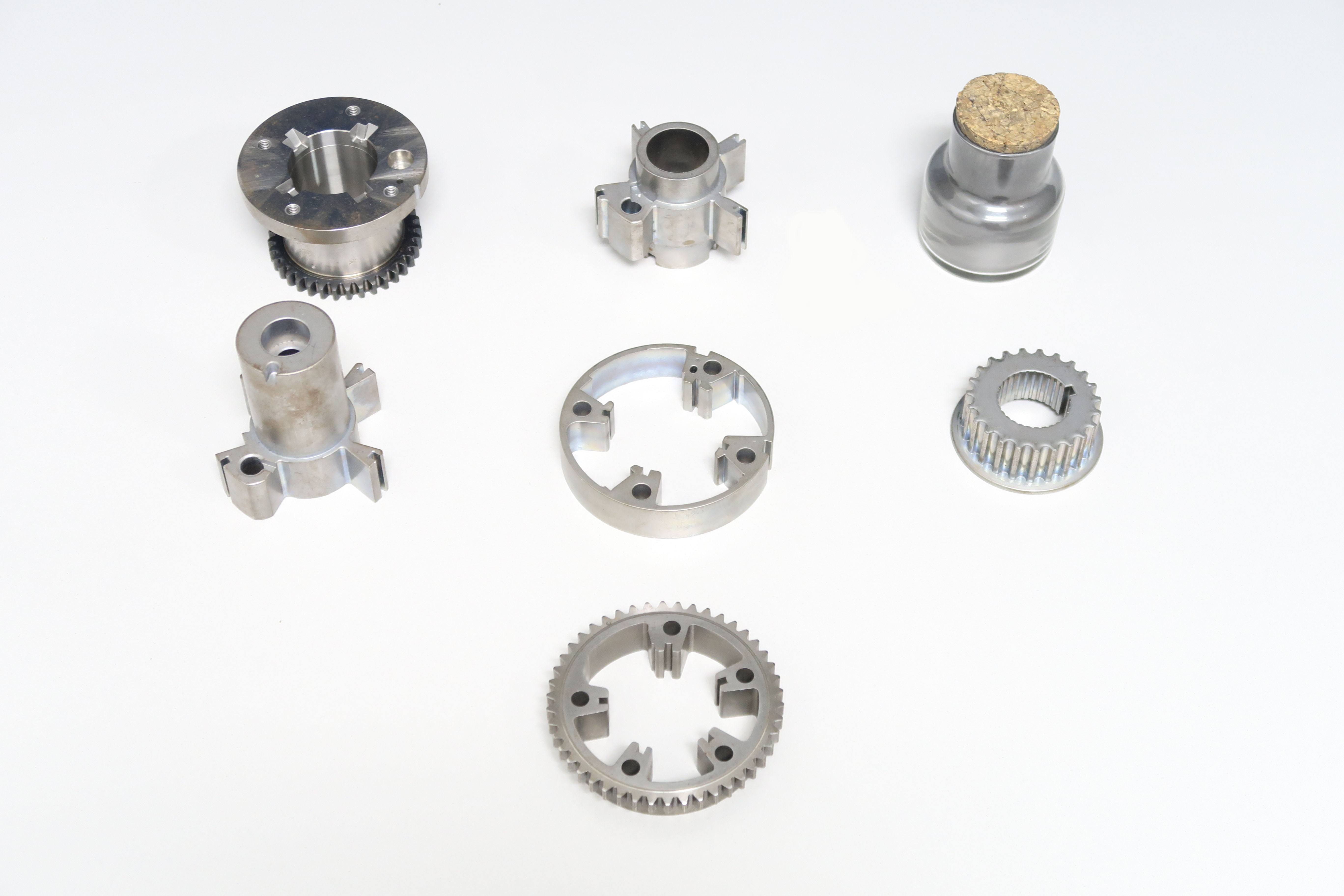
Resonac Powdered Metals America, Inc., is a leading global supplier of precision-engineered powdered metal components used in a variety of highly diverse and competitive industries. The company’s products include valve guide inserts, timing system sprockets and pulleys, and variable valve timing components, including housings, vanes, rotors, and sprockets. Resonac Materials produces high-volume, advanced-engineered components primarily for the automotive, construction/agriculture, lawn & garden, and general-purpose engines.
Powdered Metallurgy
Powdered metallurgy was practiced long before ancient artisans learned to melt and cast iron. The Egyptians made iron tools using P/M techniques from at least 3000 B.C. The ancient Inca Indians also made jewelry and artifacts from precious metal powders. The first modern P/M products was the tungsten filament for electric light bulbs developed in the early 1900's. This was followed by tungsten carbide cutting tool material in the 1930's, automobile parts in the '60s and '70s, aircraft turbine engine parts in the '80s, and parts made by powder forging (P/F), metal injection molding (MIM) and warm compacting in the '90s.
Powder Metallurgy, or P/M, is a highly developed method of manufacturing reliable ferrous and nonferrous products. Made by mixing elemental or alloy powders and compacting the mixture in a die, the resultant shapes are then sintered or heated in a controlled atmosphere furnace to bond the particles metallurgically. Basically a "chip-less" metalworking process, P/M typically uses more than 97% of the starting raw material in the finished part. Because of this, P/M is an energy and materials conserving process.
The P/M process is cost-effective in producing simple or complex parts at, or very close to, final dimensions in production rates which can range from a few hundred to several thousand parts per hour. As a result, only minor machining is required. P/M parts also may be sized for closer dimensional control and/or coined for both higher density and strength.
Most P/M parts weigh less than 5 pounds (2.27kg), although parts weighing as much as 35 pounds (15.89kg) can be fabricated in conventional P/M equipment. Many of the early P/M parts, such as bushings and bearings, were very simple shapes, as contrasted with the complex contours and multiple levels, which are often produced economically today.
Capabilities & Equipment
Industries Served
Automotive
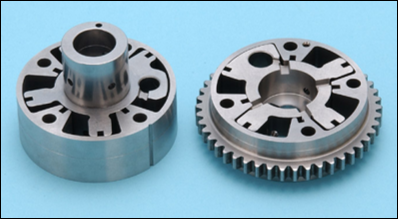 Valve Timing Control
Used in an internal combustion engine, Variable Valve Timing (VVT) systems alter the timing of a valve lift cycle, resulting in improved performance, fuel economy or emissions.
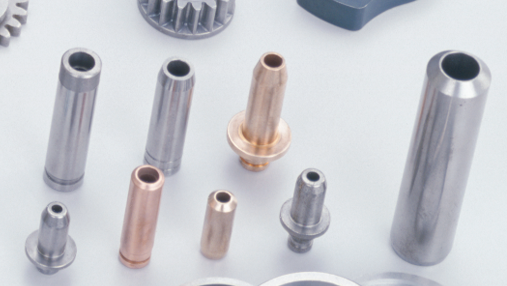 Valve Guide
HPM valve guide materials are designed to stand up to today's toughest engine environments. Whether it is high exhaust gas temperatures, little to no lubricity fuels, or valvetrain side loading. HPM has a material that can work in any application while still providing good machinability for finish reaming.
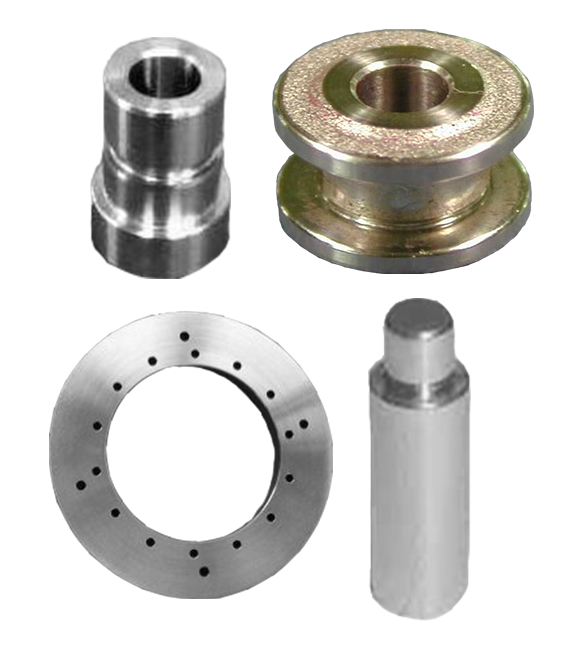 Turbocharger Parts
Turbochargers use exhaust gas to drive a turbine. This spins an air compressor that pushes extra air (and oxygen) into the cylinders, allowing them to burn more fuel boosting an engines power output.
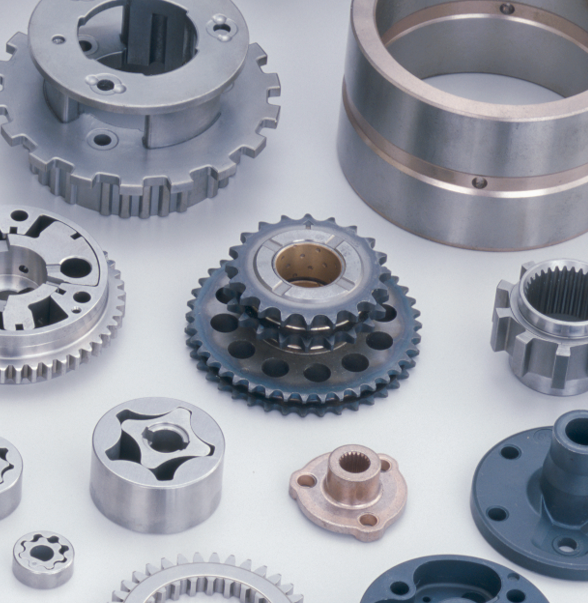 Sprockets & Pulleys
Whether driving a timing system, oil pump system, or water pump system, HPM can provide a robust low cost sprocket or pulley. HPM supplies many different sprockets and pulleys working with various types of chains and belts. HPM’s expertise can help design the right part at the right cost for any automotive sprocket or pulley application.
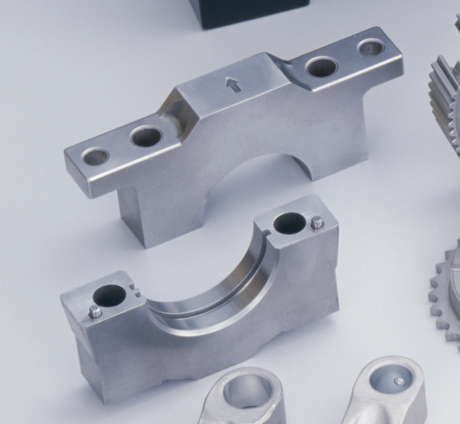 Bearing Caps
Bearing caps are used to mount the crankshaft to the engine block or the camshaft to the head. HPM’s materials and processing allow for good strength and dimensional control. HPM has highly automated production lines that can produce high volume bearing caps across the globe.
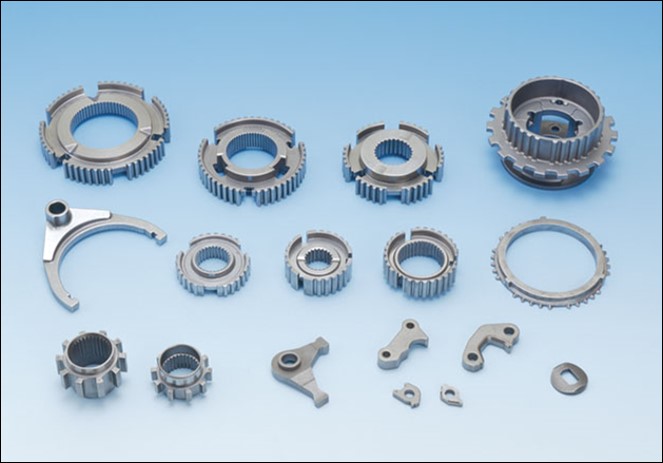 Transmission Parts
Synchronizer Hubs - Fixed on the output shaft of a manual transmission.
Synchronizer Rings - Sits between the synchronizer and each gear to synchronize speed.
Carriers (AT/CVT) - House a gear set which is the mechanical systems that provide the various forward gear ratios as well as reverse position.
Lawn & Garden
 Cylinder Blocks
Cylinder Blocks house the pistons (and pump shaft) which slide against a swash plate determining the output of the oil flow.
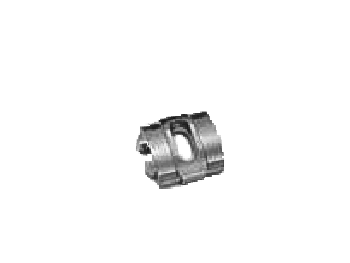 Swash Plate
Swash Plates (in Hydrostatic Transmissions) are used for varying the displacement within the pump from zero to maximum fluid output dependent upon the angle of the plate.
Construction & Agriculture
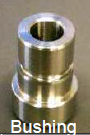 Industrial CAT Bushings
Powdered Metal bushings are used for low speed, low torque pivot applications for cylinder arms. Bushings are used to prevent excessive wear on the pivot joint housing.
Motorsports
Primary Driven Gear
Transfers power from the crankshaft to the clutch system.
Oil Pump Rotors
Rotors are used to displace oil in the oil pump and push it into the oil galleys so it can flow to the bearings and upper valvetrain. What actually creates the oil pressure is the resistance the oil encounters as it circulates through the engine.
Research & Development
Our commitment to continuous improvement requires rigorous testing and material analysis.
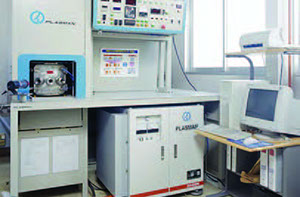 Spark Plasma Sintering Furnace – Pressure
Sintering method with SPS is used for the development of advanced materials.
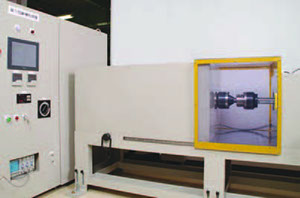 Tortion Fatigue Tester
Evaluates durability in revolution by repeating tortion fatigue.
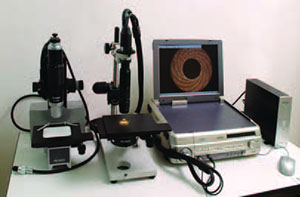 Digital Microscope
Observe surface and microstructure with good DOF (Depth of Field) capability and high magnifying power.
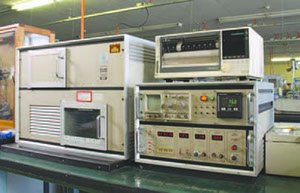 SRV Tribological Analyzer
Evaluates lubricants and materials by measuring coefficient of friction and wear amount (from room temperature to 750º C).
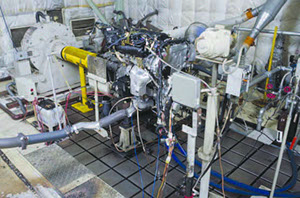 Engine Bench Tester
Evaluates the durability of valve train components in an engine simulation that utilizes specific drive modes.
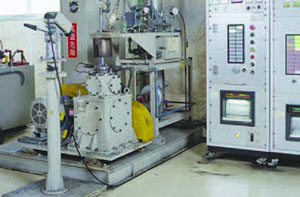 Valve Seat Wear Tester
Evaluates wear resistance valve seats in the simulated conditions of various engines.
Research & Development lab located in Matsudo, Japan